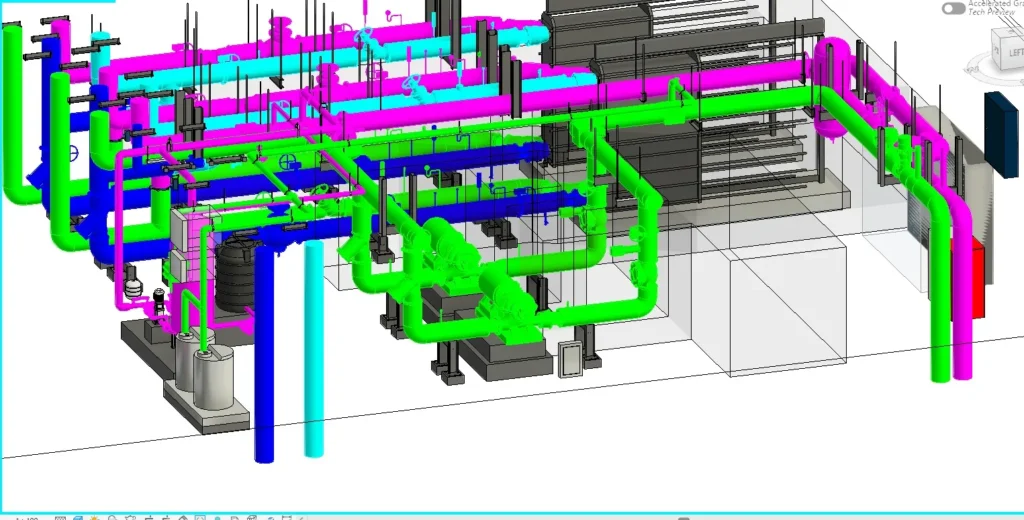
BIM Coordination for Data Centers: Why Dense MEP Needs a Model
Data centers are packed with systems
A data center looks simple from outside, but inside it is crowded. Power distribution, cooling, fire protection, cable trays and structure all compete for limited space, and the schedule is usually tight.
That is exactly the kind of project where a coordinated BIM model pays off. Conflicts that stay hidden on 2D sheets show up clearly in 3D.
Where conflicts usually appear
- Large cooling pipes and ducts crossing structural members
- Cable trays and busways competing for the same overhead routes
- Equipment clearance and maintenance access that were not checked in the model
- Sleeves and openings through floors and walls that were missed by one trade
- Changes made late by one discipline that never reached the others
Because the equipment is expensive and the uptime goals are strict, a small mistake found late can cost far more than the model work that would have caught it.
What good coordination looks like
Start with a clear model standard so every discipline builds to the same level of detail. Run clash checks on a fixed schedule, and keep a single issue log so the team knows who owns each fix.
Include space for maintenance in the checks, not only for installation. A route that fits on day one but blocks access to equipment will cause problems later. For more on clash testing, read our BIM coordination guide.
Questions to ask a BIM partner
- What level of detail will the models reach at each stage?
- How often will clash reports be shared?
- Which software and file formats do you use?
- How are changes tracked between rounds?
- Who is the single point of contact?
Honest answers show how organized a team really is.
Talk to us about your project
If you need BIM coordination support, learn more about our BIM and engineering services or contact us with your scope and timeline.
Frequently asked questions
Why is BIM coordination important for data centers?
The facilities contain dense power, cooling and cable systems in tight space, so finding conflicts in the model avoids costly rework on site.
What level of detail is needed?
It depends on the stage. Early models can be simpler, while coordination models for installation need accurate routes, equipment sizes and clearances.
Should maintenance access be checked in the model?
Yes. Checking clearances for operation and maintenance prevents routes that fit during installation but block service later.
How often should clash checks run?
On a regular schedule agreed at the start, for example every one or two weeks during active design.