BIM Coordination and Clash Detection: How It Prevents Rework on Site
What is a clash?
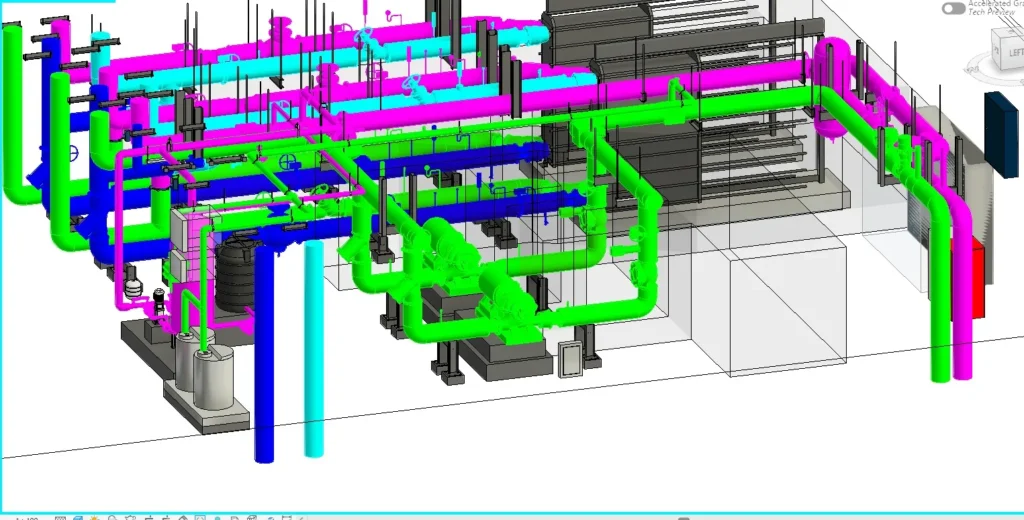
A clash is a place where two parts of a building want the same space. A duct runs through a beam. A pipe crosses a door opening. A cable tray sits where the ceiling needs to be.
On paper these problems stay hidden because each trade draws its own sheets. In a coordinated 3D model they show up clearly, before anyone cuts steel or pours concrete.
How BIM coordination works
Architecture, structure and MEP models are brought together in one place and checked against each other. Software finds the overlaps, and the coordinator sorts them into real problems and harmless ones.
- Collect the latest models from every discipline
- Align them to the same coordinates and levels
- Run clash tests between the key pairs, such as structure and ducts
- Group and rank the results so the team sees what matters first
- Hold a short review, assign each issue to one owner and track it to closure
This cycle repeats as the design develops. Early rounds catch big conflicts, and later rounds catch the small ones.
Why it saves money
A conflict found in the model costs a few hours to solve. The same conflict found on site can mean cutting, re-ordering materials, extra labor and a delayed schedule.
Coordination also gives contractors confidence. When trades agree on routes before installation, crews waste less time waiting and reworking.
What makes a coordination process work
Good coordination needs clean models, a clear level of detail, and someone who owns the process. Models that are inaccurate or missing key elements give false comfort. Read more in our guide to levels of development.
Agree who fixes each type of clash. Without that, the same issues bounce between teams for weeks.
Need coordination support?
We provide BIM and engineering coordination for architects, engineers and contractors. If you are choosing a partner, our article on how to choose a BIM outsourcing company may help, or you can contact us now.
Frequently asked questions
What is clash detection in BIM?
It is the process of testing coordinated 3D models to find places where building elements overlap or conflict, such as a duct passing through a beam.
When should coordination start?
As early as models from different disciplines exist. Early rounds find large conflicts, and later rounds refine the details.
Does every clash need to be fixed?
No. Some overlaps are harmless. A coordinator reviews the results and decides which ones are real problems.
Who fixes the clashes?
The team responsible for the element that should move. Agree on this at the start so issues do not bounce between trades.